
|
Bandages Then and Now
From Sumeria to the 21st Century
|
|
Sumerians
|
|
Ointments with antiseptic qualities made from plants, spices, and animal fats were placed
on bandages |
|
Egyptians
|
|
Pieces of fresh meat were pressed against the wound to stop bleeding. If the wound
was wet, sour barley bread was applied. If the wound was too dry, grease and turpentine were used to add moisture. Poultices then bandages made of linen were finally applied to cover the wound |
|
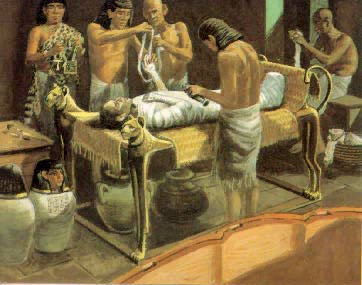
Wrapping mummies made Egyptians doctors experts in dressing applications
|
|
Greeks and Romans
|
|
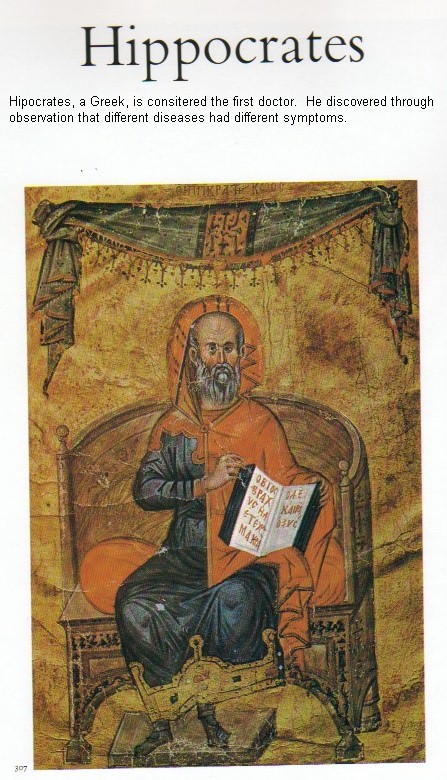
The Greeks had a book that dealt with wounds suffered in battle. It contained the instruments,
apparatus, and bandages used to treat injuries |
|
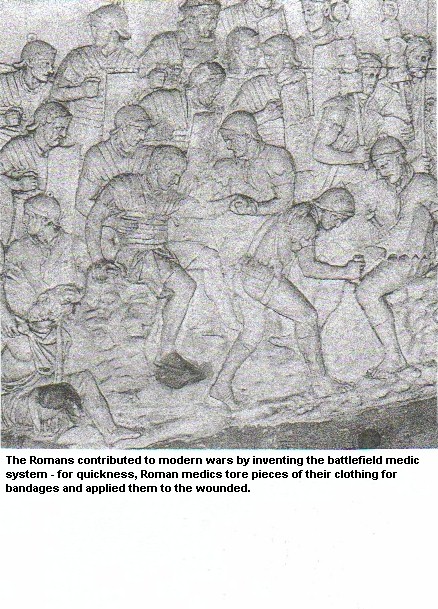
Roman doctors used clamps to hold gaping wounds and insicions closed
|
|
Doctors were known to suck some of the blood out of a wound to prevent infection. Then, they
applied a powder to soothe the wound before covering it with bandages made of wool or linen |
|
The Hemostat Bandage (Fibrin Sealent Bandage)
|
|
Bandage saturated with thrombin, fibrinogen, and factor 13 proteins that are
extracted from the human body. |
|
Banadges are stiff until placed on a wound. Once applied, they take the
shape of the wound |
|
Fibrin in Spray, Foam, & Sealant
|
|
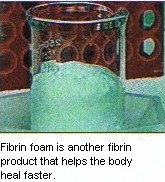
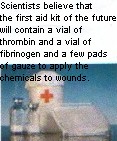
Each contains the dry clotting agents fibrinogen and thrombin that are mixed
then sprayed or placed directly on the wound |
|
Each contains massive concentrated amounts of these agents to stop bleeding
many times faster than simple pressure on a bandage |
|
Present ~ 2004
|
|
The Navy Alginate Bandage
|
|
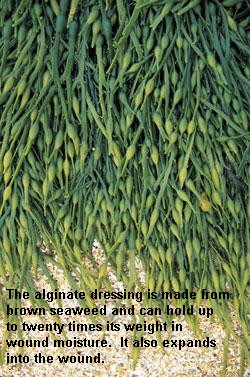
Made of marine microalga which contains polynacetyl glucosamine and a polymer that
attaches to tissue and seals the wound almost instantly without using a clotting angent |
|
Poultices and bandages made of wool, goat hair, flax, cotton, gold, silk, and hemp
were used to cover wounds |
|
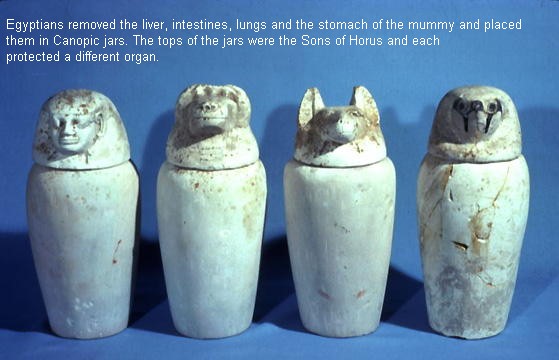
During mummification (which took 70 days) the internal organs were removed and
placed in Canopic Jars, the body was packed with natron, a salty drying liquid, linen was used to restore the body's form and features. The body was wrapped in layers of linen. |
